Our latest research is published in 𝘔𝘰𝘭𝘦𝘤𝘶𝘭𝘢𝘳 𝘛𝘩𝘦𝘳𝘢𝘱𝘺 𝘖𝘯𝘤𝘰𝘭𝘰𝘨𝘺:
“𝐂𝐨𝐦𝐩𝐚𝐫𝐚𝐭𝐢𝐯𝐞 𝐞𝐯𝐚𝐥𝐮𝐚𝐭𝐢𝐨𝐧 𝐨𝐟 𝐨𝐧𝐜𝐨𝐥𝐲𝐭𝐢𝐜 𝐯𝐢𝐫𝐮𝐬𝐞𝐬 𝐫𝐞𝐯𝐞𝐚𝐥𝐬 𝐨𝐩𝐩𝐨𝐬𝐢𝐧𝐠 𝐩𝐫𝐞𝐟𝐞𝐫𝐞𝐧𝐜𝐞𝐬 𝐟𝐨𝐫 𝐠𝐥𝐢𝐨𝐛𝐥𝐚𝐬𝐭𝐨𝐦𝐚 𝐬𝐮𝐛𝐭𝐲𝐩𝐞𝐬”
Glioblastoma is the most aggressive primary brain tumor in adults and remains extremely difficult to treat. Oncolytic viruses, viruses that selectively infect and kill cancer cells while stimulating an anti-tumor immune response, are a promising therapeutic strategy, but patient responses are highly variable.
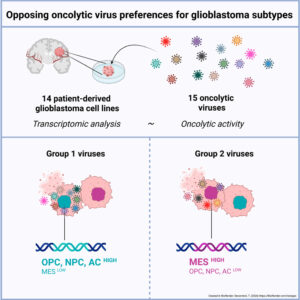
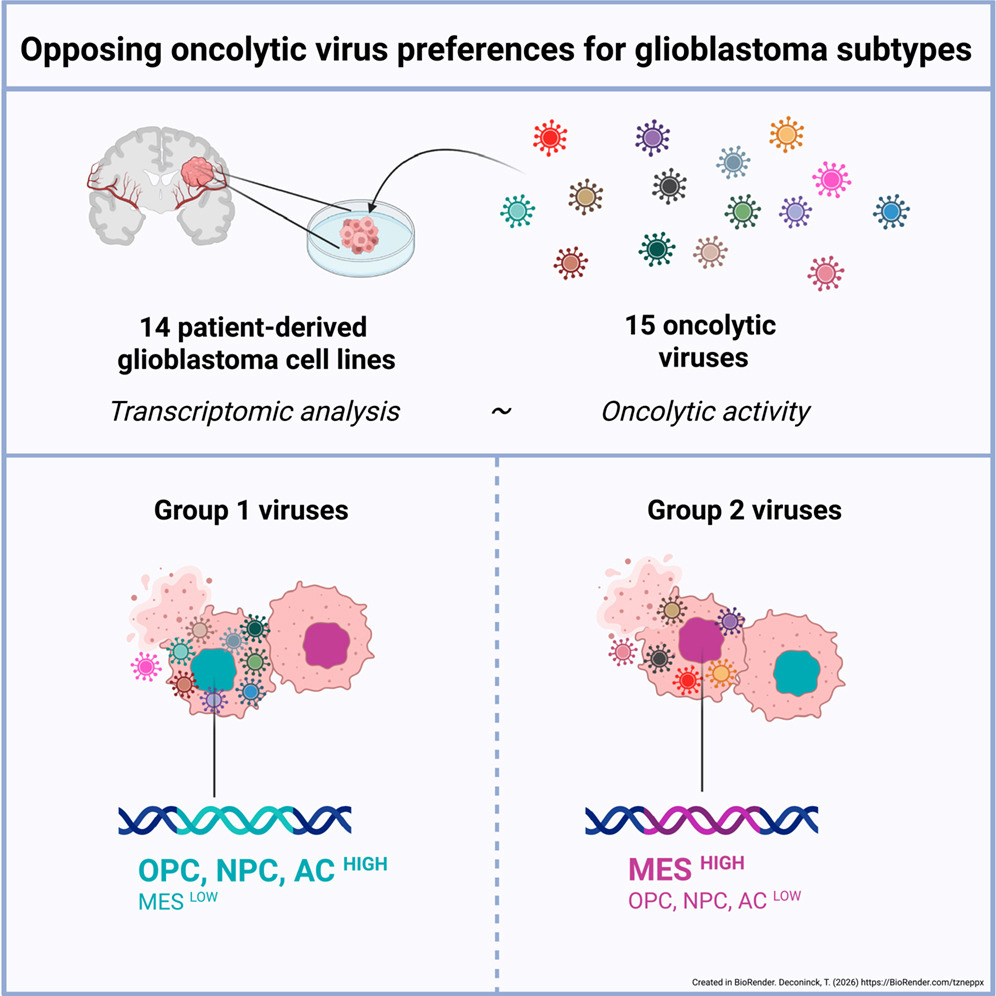
In this study, we identified two main groups of oncolytic viruses based on their activity profiles, each showing distinct preferences for glioblastoma subtypes and opposite associations with tumor-associated biological processes.
These findings highlight the importance of matching the right virus to the right tumor and support the development of personalized and combinatorial oncolytic virotherapy approaches for glioblastoma patients.
Congratulations to Tine Deconinck and all co-authors who contributed to this work!